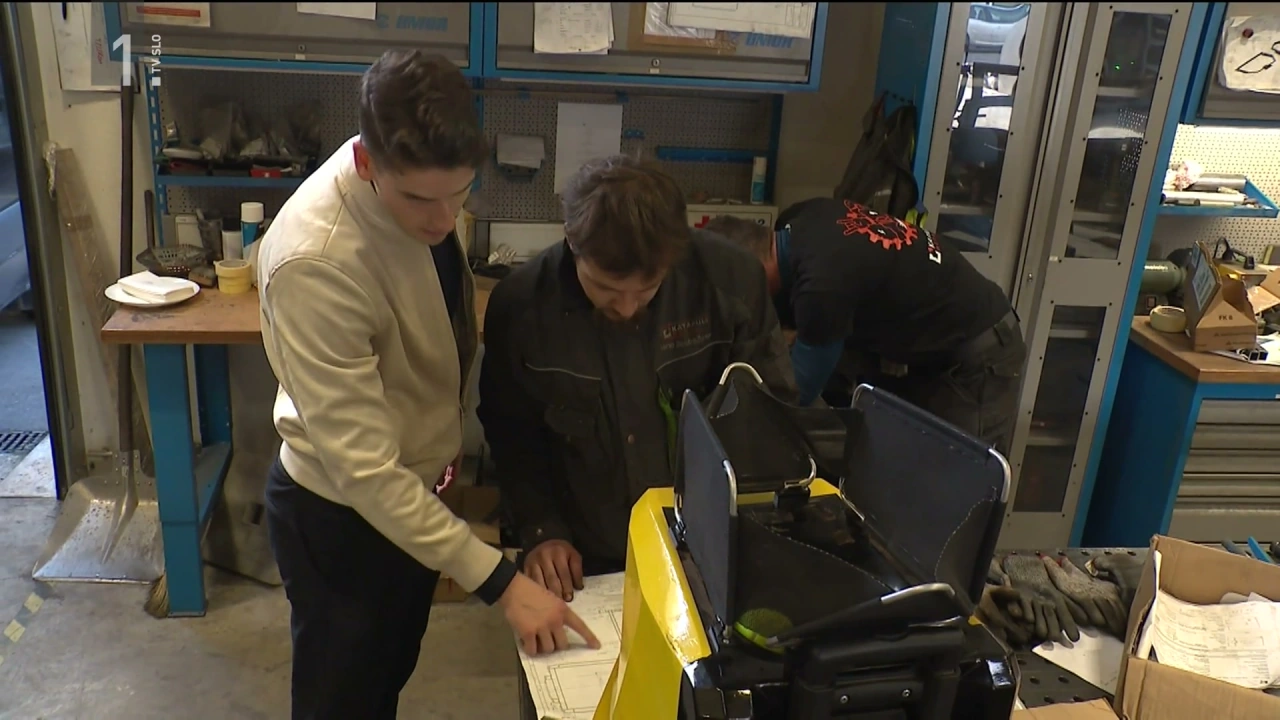
Toni Ulčar at work in the workshop shown in the 2023 Podjetno naprej feature. RTV Slovenija / Podjetno naprej.
Toni Ulčar wanted to keep playing tennis when normal practice became difficult during the 2020 lockdown. As a tennis player studying mechanical engineering, he began looking at ball machines with a different question in mind: what would practice feel like if the machine could move?
RTV Slovenija’s business programme Podjetno naprej followed that idea into the workshop. Its 2023 feature brings together the early prototypes, the people who helped develop the hardware and the training problem that started it all.
A training problem became an engineering project
In the programme, Toni describes borrowing stationary ball machines while he was looking for ways to practise independently. He wanted to explore more demanding training situations, with balls coming from different positions and angles.
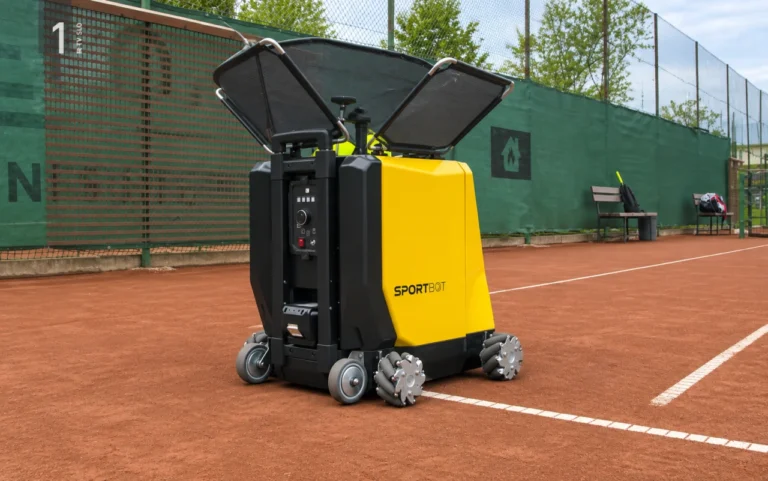
That became the central idea behind Sportbot: a machine that could change its position as part of a sequence. The goal was to bring more of the variation of a tennis exchange into solo practice. You can read more about that starting point in the story behind Sportbot.
Testing the idea before building the product
The feature describes early prototypes that did not work out. Before refining the hardware, Toni also needed to answer a more basic question: was a moving machine something players would actually want?
He put the idea out and looked for people in Slovenia with experience developing physical products. That search brought him to Katapult, where access to manufacturing knowledge and equipment could help him move beyond an early prototype.
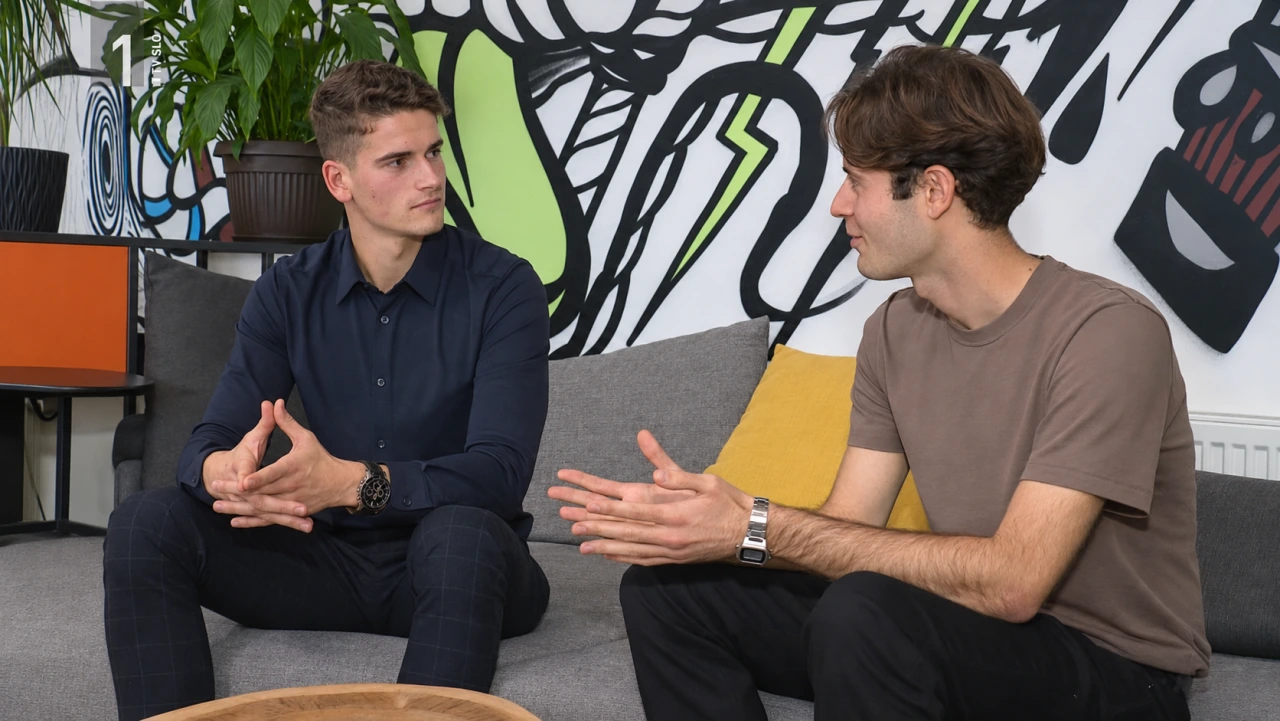
RTV Slovenija / Podjetno naprej · AI-enhanced.
It is a useful part of the story for anyone curious about how Sportbot was built. A design has to survive both kinds of testing: whether people find the idea useful, and whether the hardware can turn it into something they can use on court.
Inside the workshop in Trbovlje
The programme shows engineering drawings, workshop activity and discussions about making aluminium parts. Katapult Metal’s contribution included manufacturing expertise and support for small-volume prototyping, with attention to how parts might later be produced in series.
The wider support environment connected mechanical engineering with electronics, computing and programming. The report also describes testing, exchanges of ideas and business-development advice involving Dewesoft. Those practical contributions sit alongside Toni’s own engineering work in the story of the early machine.
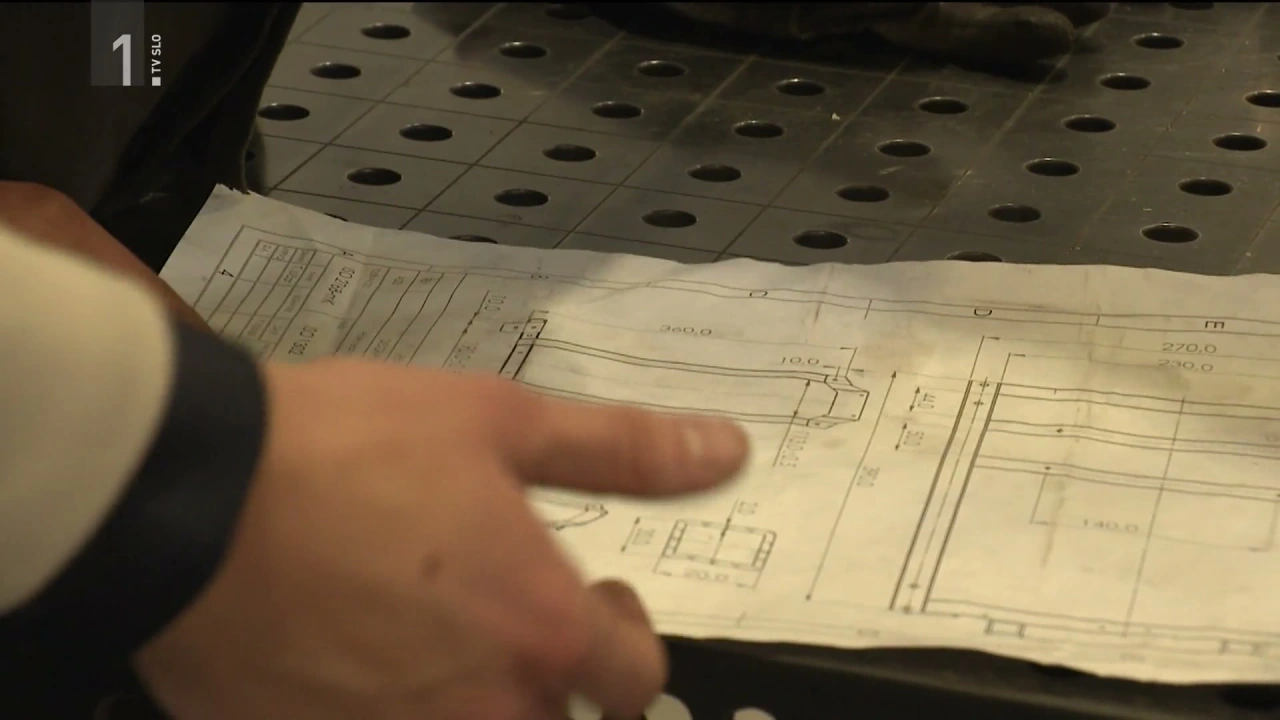
RTV Slovenija / Podjetno naprej.
The photographs here come from the original feature: the workshop, the drawings and Toni’s interview. They show the work behind the product as it was presented in 2023.
From the early machine to tennis and padel
Sportbot’s development continued beyond that first television profile. The Mesto Akrobatov story follows the broader path from the early moving prototype towards padel, while the tennis and padel machine story explains the later cross-sport direction.
For today’s machine and training information, explore Sportbot for tennis.
Watch the original feature
Watch Sportbot on Podjetno naprej in the RTV 365 archive. The feature runs 4 minutes 57 seconds and is listed in the archive on 13 November 2023.
Find more demonstrations, club visits and company stories in Sportbot News.